
Tag: Yoweri Museveni

  • Kenya and Uganda launch major SGR link to boost regional trade

    Kenya and Uganda launch major SGR link to boost regional trade

    KISUMU, Kenya — Kenya and Uganda have taken a significant step toward reviving a long-delayed regional railway vision, with Presidents William Ruto and Yoweri Museveni jointly inaugurating a key section of the Standard Gauge Railway (SGR) expected to transform trade across East Africa.

    The launch marked the start of the 107-kilometre Kisumu–Malaba segment, a crucial link in the planned nearly 1,000-kilometre corridor stretching from the Port of Mombasa to the Ugandan border.

    This extension aims to complete a seamless transport route connecting Kenya’s coast to Uganda and beyond. Once linked to Uganda’s planned Malaba–Kampala railway, the line is expected to become a backbone for East African trade.

    Coverage of the groundbreaking was initially reported by Vivid Voice News our sister publication under the editorial leadership of Michael Wandati, who highlighted the transformative potential of the project for regional logistics and trade.

    Officials project that the completed Nairobi–Kampala corridor could reduce travel time from about 14 hours to just four, while cutting freight costs by up to 35 percent, offering a major boost to efficiency and regional competitiveness.

    Speaking at the ceremony, President Ruto described the project as transformative:

    “It is in moments such as this… that the destinies of our people, our cities, and our nations are shaped.”

    The SGR extension has faced several years of delays, mainly due to financing challenges after China reduced infrastructure lending under the Belt and Road Initiative. Construction had stalled more than 350 kilometres short of the Ugandan border, raising concerns about the railway’s long-term viability.

    Kenya has since adopted a new funding approach, including revenue from a railway development levy, to ensure the project’s completion.

    Advertisement

    The Kenya segment from Naivasha through Kisumu to Malaba is estimated at over $5.5 billion, while Uganda’s connecting line to Kampala is projected at about $3 billion.

    The modern SGR draws inspiration from the historic Uganda Railway, built over a century ago to link the Indian Ocean to the interior. That line was once the economic backbone of the region, supporting the growth of cities such as Nairobi and Kisumu.

    However, decades of underinvestment, ageing infrastructure, and the shift to road transport led to its gradual decline. The SGR aims to replace the old metre-gauge system with a faster, more efficient network aligned with the East African Community’s broader railway master plan.

    Economic potential and regional stakes

    According to Vivid Voice News reporting by Michael Wandati, the SGR is expected to unlock economic opportunities across western Kenya and the wider Great Lakes region by:

    • Lowering transport costs for bulk goods
    • Improving access to export markets
    • Streamlining supply chains
    • Supporting industrialisation along the corridor

    Nearly 70% of cargo handled at Mombasa is destined for Uganda and other landlocked countries, underlining the corridor’s strategic importance.

    For Uganda, the enhanced rail connectivity is critical to reducing import and export costs, which currently rely heavily on slower and more expensive road transport.

    Advertisement

    President Museveni has emphasised that delays in completing the railway have limited Uganda’s access to seaports, increasing costs for businesses.

    Regional competition and strategic significance

    The project also highlights competition over trade routes in East Africa. President Ruto has warned that Kenya’s position as the primary gateway to the region is not guaranteed, especially as neighbouring countries invest in alternative corridors.

    Completing the SGR link to Uganda strengthens Kenya’s role as a logistics hub for East and Central Africa, connecting markets in Rwanda, South Sudan, and the Democratic Republic of Congo.

    If completed as planned by around 2028, the Kenya–Uganda SGR link will represent a milestone in regional infrastructure development and serve as a model for cross-border cooperation and sustainable infrastructure financing.
  • Museveni pledges Shs5 billion boost for content creators’ SACCO

    Museveni pledges Shs5 billion boost for content creators’ SACCO

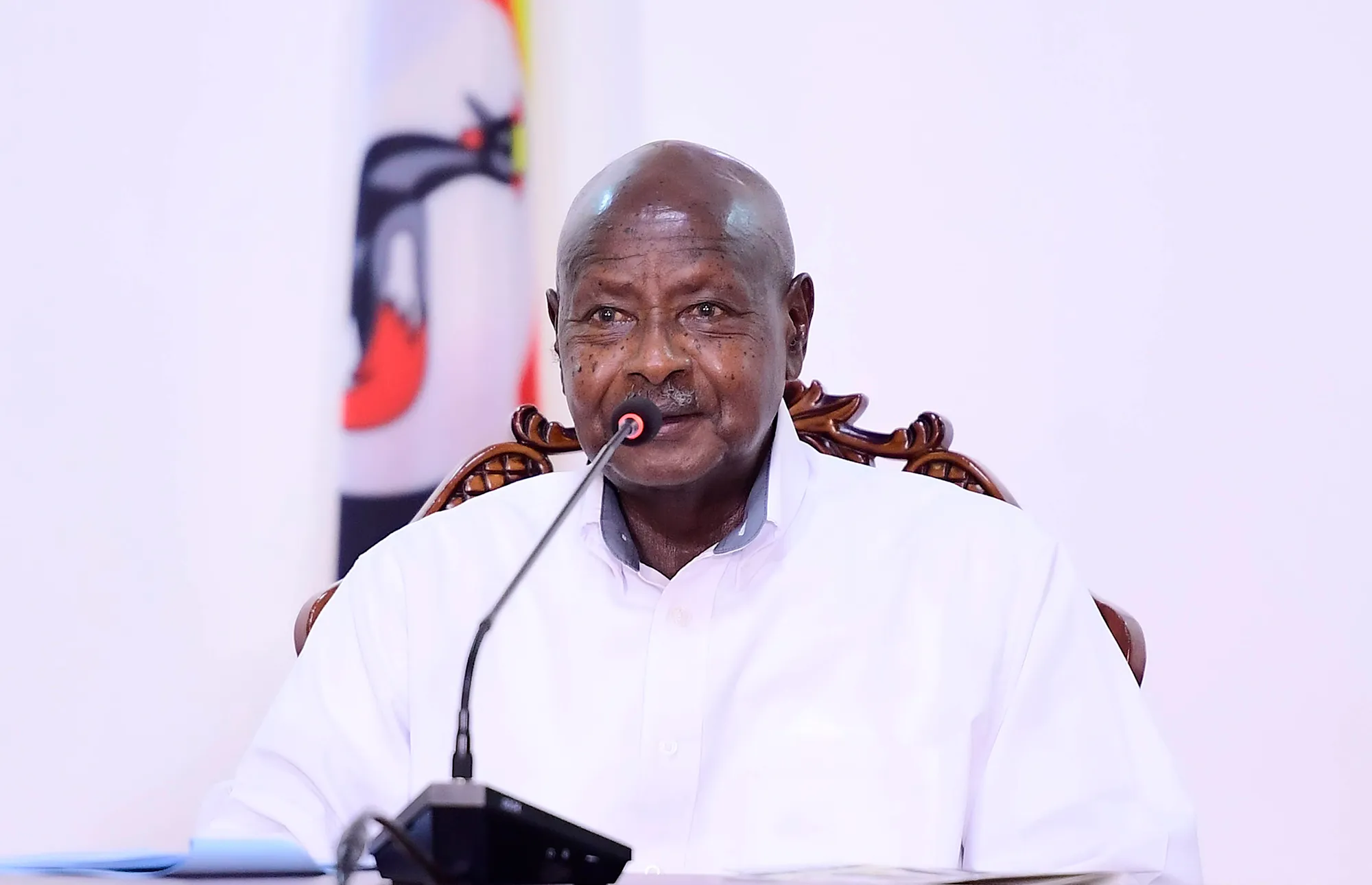
    KAMPALA, Uganda — President Yoweri Museveni has pledged Shs5 billion to support a Savings and Credit Cooperative Organisation (SACCO) for Uganda’s organised content creators, formally recognising the sector’s growing role in the country’s wealth creation ecosystem.

    Speaking during an engagement focused on promoting locally made products, Mr Museveni described content creation as a modern form of sales promotion that helps connect producers to consumers, particularly through social media platforms.

    “What you are calling content is sales promotion for people to know about goods and people buy it. That should be supported, especially if you are promoting local products. Then you become a useful partner,” he said.

    The President encouraged content creators to package Ugandan goods professionally for both domestic and international markets, adding that government backing would prioritise structured and organised groups.

    “If you have got groups doing that, we shall support them,” he said.

    Recognising the digital economy

    President Museveni noted that the practice of promoting products through content is not new but represents an evolution of traditional marketing models. In earlier decades, companies relied heavily on radio and television advertising to build brand awareness.

    He cited Nytil, a textile product manufactured in Jinja during the 1960s, as an example of how local brands were aggressively marketed across East Africa through conventional media.

    “In the chain of wealth creators, a layer of operators has come up to use social media as an easy way of communication to package and present products to the consumers. That is useful,” Mr. Museveni said.

    His remarks signal growing official recognition of Uganda’s digital creative economy, which has expanded rapidly in recent years as smartphone penetration and internet access have increased.

    Advertisement

    Platforms such as TikTok, YouTube, Facebook and Instagram have enabled Ugandan creators to monetise content through advertising partnerships, brand endorsements and cross-border marketing.

    Strengthening the sector through a SACCO

    The proposed Shs5 billion capital injection into a dedicated SACCO aims to provide structured financial support to organised content creators.

    SACCOs in Uganda typically offer members access to credit, savings mobilisation and investment opportunities, tools that could help creators professionalise operations, invest in production equipment and expand their audience reach.

    Government officials have increasingly emphasised the creative and digital industries as part of broader economic transformation strategies, particularly in tackling youth unemployment.

    Uganda’s population remains one of the youngest globally, with a significant proportion engaged in informal or digital income-generating activities.

    Industry observers say formal financial inclusion mechanisms could stabilise earnings in a sector often characterised by irregular income streams.

    Advertisement

    Economic context

    The creative economy is gaining prominence across East Africa, with governments exploring policy frameworks to regulate digital monetisation, intellectual property protection and online taxation.

    Uganda has previously introduced measures affecting social media usage, underscoring the complex relationship between regulation and digital entrepreneurship.

    Museveni’s latest pledge positions content creators within the broader national development agenda, framing them as partners in promoting “Buy Uganda, Build Uganda” initiatives and strengthening domestic value chains.

    If implemented effectively, the SACCO could serve as a pilot model for supporting emerging digital sectors through cooperative financing structures.