KAMPALA, Uganda — The United States has imposed sanctions on Rwanda’s Ministry of Defence and a financial institution accused of facilitating military and financial support for the M23 rebel group operating in eastern Democratic Republic of Congo (DRC).
The measures, announced by the US Department of the Treasury on Wednesday, October 28, target the Rwandan Ministry of Defence and Zigama Credit and Savings Society over what Washington describes as their role in sustaining M23’s insurgency and its political network.
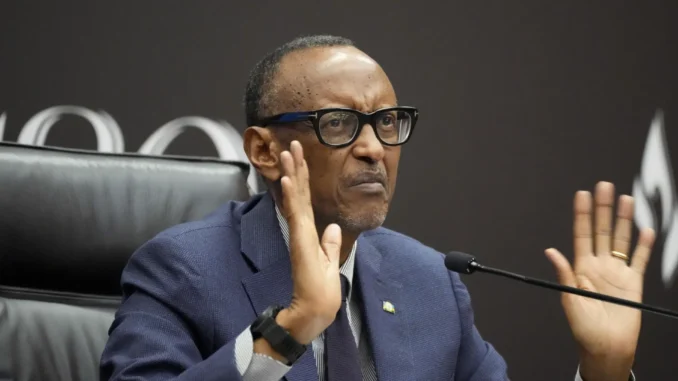
US Treasury Secretary Scott Bessent said the sanctions were intended to hold Rwanda accountable for commitments made under the Washington Accords for Peace and Prosperity, signed by Rwandan President Paul Kagame and his Congolese counterpart, Felix Tshisekedi, in December 2025.
“Rwanda must halt its support for M23 and withdraw its troops from eastern DRC,” Bessent said.
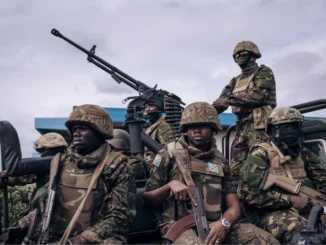
According to the Treasury Department, Rwanda has deployed thousands of troops across North and South Kivu provinces, where its forces allegedly operate alongside M23, providing weapons, supplies, logistical assistance and military training.
Washington also accused Rwandan forces of introducing advanced military equipment into the conflict, including surface-to-air missile systems and electronic jamming devices that could threaten civilian aviation in eastern Congo.
US accuses Rwandan financial institution of funding M23
The sanctions also target Zigama Credit and Savings Society, a financial institution that the Treasury says operates on behalf of Rwanda’s security services.
Washington alleges that the institution facilitated payments to suppliers in China and other countries for weapons, ammunition and military equipment intended for the Rwanda Defence Force (RDF).
The Treasury further accused Zigama of facilitating payments for military training, as well as financial transactions worth tens of millions of dollars involving M23 and its political network.
It also alleged that one of the institution’s branches facilitated the transportation of gold extracted from areas under M23 control in eastern DRC into Rwanda.
The allegations place financial networks and mineral trading at the centre of Washington’s latest attempt to disrupt the support systems it says are sustaining the conflict.
The Treasury said the Congo River Alliance, M23’s political wing, announced the formation of a successor organisation, the Front for the Refoundation of the Nation, on October 12.
Sanctions test Washington peace agreement
The latest measures come despite diplomatic efforts to end years of fighting in eastern Congo.
Kagame and Tshisekedi signed the US-brokered Washington Accords for Peace and Prosperity on December 4, 2025, in an agreement witnessed by US President Donald Trump.
The accord sought to advance a peaceful resolution to the conflict while promoting regional economic cooperation, investment and transparency in critical mineral supply chains.
However, fighting has continued in eastern DRC, where M23 maintains control over strategic areas, including Goma and Bukavu, the provincial capitals of North and South Kivu respectively, which the group captured in early 2025.
Rwanda has consistently denied supporting armed groups in eastern Congo, maintaining that its security concerns are linked to the activities of the Democratic Forces for the Liberation of Rwanda (FDLR), an armed group whose origins are associated with the 1994 genocide against the Tutsi.
Kigali has also argued that the DRC must address the threat posed by the FDLR as part of efforts to implement the peace agreement.
The Congolese government welcomed the latest US sanctions, urging Rwanda to honour its commitments under the Washington Accords and withdraw its troops from Congolese territory.
What the sanctions mean for Rwanda
Under the new measures, assets belonging to the designated institutions that are located in the United States, or held or controlled by US persons, must be blocked and reported to the Office of Foreign Assets Control (OFAC).
US persons are generally prohibited from conducting transactions involving the sanctioned entities unless authorised by the Treasury Department or covered by an applicable exemption.
Also Read: DR Congo takes Rwanda to international court over decades of alleged ‘abuses’
The restrictions can also expose foreign financial institutions and other entities to sanctions risks if they engage in certain transactions involving the designated organisations.
The latest action follows sanctions imposed by Washington in March 2026 against the Rwanda Defence Force and four senior military officials over alleged support for M23.
Those measures targeted the military and senior commanders accused of supporting, training and fighting alongside the rebel group.
By extending the sanctions to Rwanda’s Defence Ministry and a financial institution, Washington is widening its focus beyond military commanders to the government structures and financial networks it alleges are supporting the insurgency.
The Treasury Department said the ultimate objective was to change behaviour and secure compliance with commitments intended to restore peace and stability in eastern Congo.